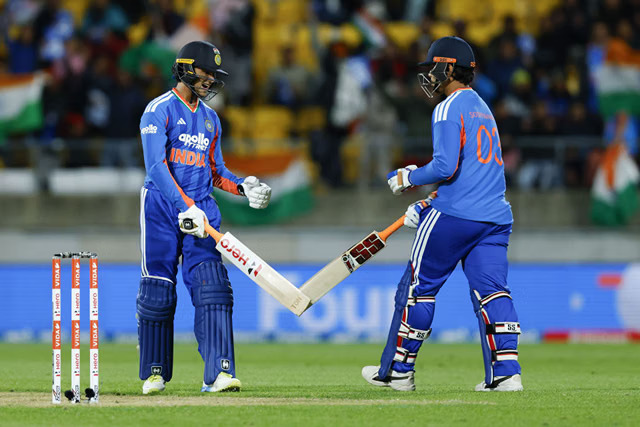
India’s latest T20I performance against New Zealand has offered a compelling illustration of how quickly modern cricket can shift when a batting side combines attacking intent with sustained execution. A target that would ordinarily demand a carefully managed chase became an opportunity for an extraordinary display of power-hitting, as India raced to victory in the third match and established a decisive position in the five-game series.
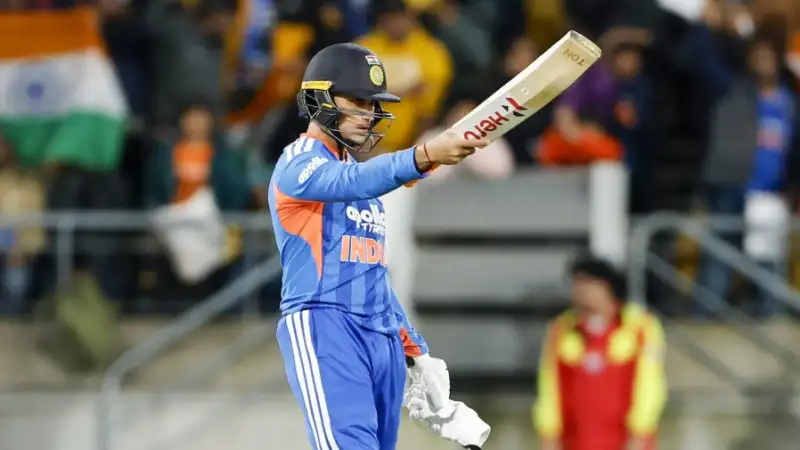
Abhishek Sharma was at the centre of the spectacle, producing 113 runs from just 38 deliveries as India chased down New Zealand’s target of 199 in only 13.2 overs. The result gave India an unassailable 3–0 lead, confirming the series victory with two matches still to play. Beyond the scoreline, the manner of the chase offered valuable insight into the team’s evolving approach to the shortest international format.
The defining feature of Abhishek’s innings was not simply the number of runs but the speed at which he accumulated them. Scoring at nearly three runs per delivery, he put immediate pressure on New Zealand’s bowling plans. When a batter scores at that rate, conventional defensive options become increasingly difficult to sustain. Even a reasonably accurate over can fail to contain the scoring if the batter consistently finds the boundary.
Such innings also change the psychology of a chase. A target approaching 200 can place pressure on the batting side to preserve wickets and calculate risks carefully. India instead forced the opposition to respond to an escalating scoring rate from the outset. That shift made it harder for New Zealand to build pressure through dot balls, rotate bowling options comfortably or dictate the pace of the contest.
Abhishek’s performance also highlights the importance of matching power with decision-making. Aggressive batting is most effective when a player identifies scoring opportunities without allowing the required rate to become a source of unnecessary risk. His 113 demonstrated how quickly a strong start can transform the equation, reducing the burden on the middle order and leaving the opposition with limited time to recover.
For India, the larger significance lies in the confidence such performances can create across the batting unit. When one player takes control of a chase, teammates can play according to the match situation rather than feeling compelled to manufacture a rapid response. It also gives the team management an opportunity to assess combinations and roles in the remaining fixtures without the immediate pressure of needing to secure the series.
New Zealand, meanwhile, must examine how its bowling strategy can adapt when an opponent attacks from the beginning. Variations in pace, changes of length and field placements remain important, but their effectiveness depends on execution under pressure. The challenge is not merely to restrict boundaries; it is to disrupt a batter’s rhythm before the innings becomes difficult to contain.
Although the series is decided, the final two matches still carry competitive value. India can test its consistency and depth, while New Zealand has an opportunity to respond, refine its plans and avoid allowing one result to define the entire campaign.
India’s victory ultimately reflects a broader truth about T20 cricket: totals are no longer judged only by the runs on the scoreboard, but also by how effectively a team can defend them against sustained aggression. Abhishek Sharma’s remarkable innings made that lesson unmistakable, while India’s 3–0 advantage underlined the effectiveness of its approach.