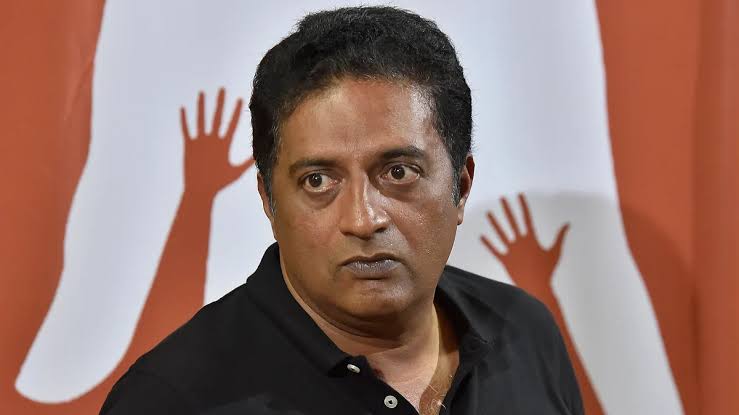
For Prakash Raj, public recognition has never been limited to his performances on screen. The acclaimed actor has increasingly become a familiar presence in discussions about governance, democracy and social issues, with his political statements often generating reactions as strong as those surrounding his film roles.
Over the years, Raj has repeatedly questioned the policies and actions of the Bharatiya Janata Party (BJP) government at the Centre and Prime Minister Narendra Modi. His criticism has covered issues ranging from political accountability and religious polarisation to freedom of expression and the responsibilities of elected representatives. While his comments have earned support from sections of the public, they have also attracted criticism from people who disagree with his political positions.
Raj's approach to political commentary is closely associated with his public questioning of those in power. His use of the hashtag #JustAsking became a recognisable feature of his social media presence, reflecting his stated belief that citizens should be able to question elected representatives regardless of their personal voting preferences. At the Kerala Literature Festival in January 2024, he explained that criticism of a prime minister should be understood as part of democratic accountability rather than personal hostility. He also said that he would question whoever held power, regardless of which political party governed the country.
The actor has also spoken about the labels attached to people who criticise the ruling establishment. In a January 2024 interview with The Quint, Raj questioned why criticism of political leaders or the BJP was sometimes portrayed as opposition to Hinduism. He argued that political disagreement and religious identity should not be treated as interchangeable. The distinction is significant in a political environment where public debates frequently involve questions of religion, ideology and national identity.
His activism has not remained confined to social media. Raj has participated in public discussions, protests and citizen-led campaigns, using his visibility as an established actor to draw attention to issues he considers important. In July 2026, ThePrint reported on his participation in a protest in New Delhi concerning examination paper leaks and demands for accountability from the Union government. In October 2026, he also addressed the media in Hyderabad, demanding that the Special Intensive Revision of electoral rolls be scrapped and raising concerns about the process.
Such interventions illustrate the increasingly visible overlap between celebrity and civic engagement in India. Actors with large public profiles can bring attention to issues that might otherwise receive limited visibility, but their influence also invites scrutiny. Public figures are expected to substantiate their claims, distinguish allegations from established facts and remain open to criticism themselves. Their popularity does not automatically make their political arguments correct, just as disagreement with those arguments does not invalidate their right to express them.
Raj's position has therefore remained a subject of debate. Supporters view his statements as an example of an artist exercising his democratic freedom, while critics challenge his tone, conclusions or political emphasis. The broader question extends beyond one actor: how much space should public figures occupy in political debate, and how should audiences assess their interventions?
For now, Prakash Raj continues to combine his acting career with an active public presence. His political comments remain part of his public identity, ensuring that his appearances and statements are discussed not only in cinema circles but also in conversations about democracy and accountability.