Director: Rahul Sankrityan
Cast: Vijay Deverakonda, Rashmika Mandanna, Arnold Vosloo, Eeshwari Rao, Lal, Vinod Sagar and others
Music Directors: Ajay and Atul
Producer / Banner: Naveen Yerneni and Y. Ravi Shankar / Mythri Movie Makers, presented by T-Series Films
Release Date: October 16, 2026
Overview & Story
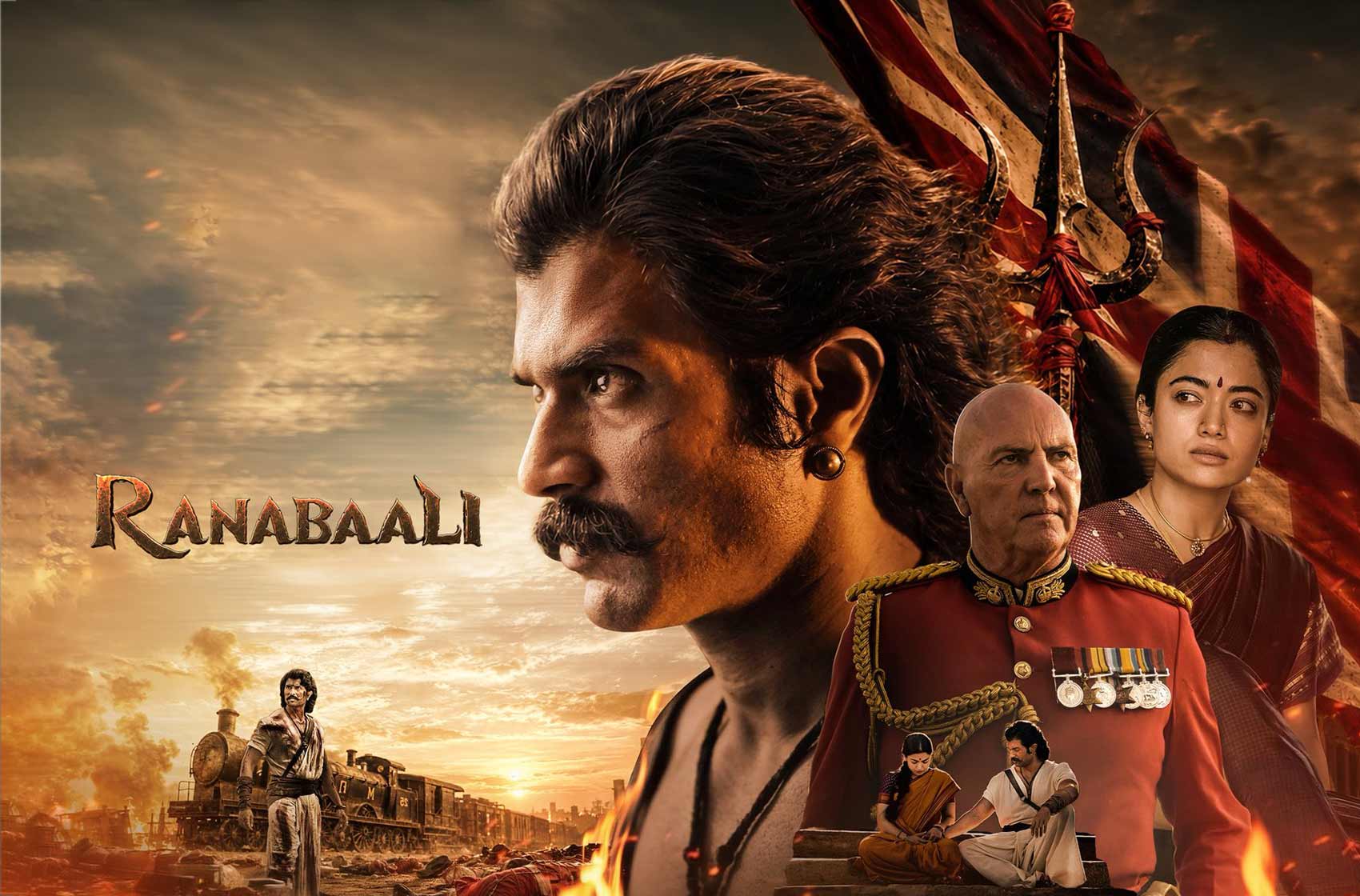
Ranabaali takes Telugu cinema into a turbulent chapter of colonial Indian history, drawing inspiration from the devastating Madras Famine of 1876 to 1878 and the suffering of ordinary people under British rule. Directed by Rahul Sankrityan, the film places Vijay Deverakonda in the titular role of Singanamala Bobbili Ranabaali, a warrior whose resistance grows out of the exploitation and injustice inflicted on his people. Rather than presenting the historical setting merely as a backdrop for a conventional action spectacle, the film attempts to connect famine, colonial power, economic exploitation and the emergence of rebellion. Its central idea has considerable dramatic potential: when the institutions that should protect ordinary people become instruments of oppression, resistance begins to look less like a choice and more like a necessity.
Rashmika Mandanna plays Jayamma, Ranabaali’s wife and an important emotional presence in his life, while Arnold Vosloo appears as the British antagonist Sir Theodore Hector. Their opposing positions establish the film’s principal conflict, bringing personal relationships into a larger struggle over dignity, survival and freedom. The narrative moves between the suffering of the local population and the growing determination to challenge those responsible for their circumstances. The pre-interval stretch attempts to transform this tension into a decisive turning point, raising expectations for the confrontation that follows. The premise is powerful, and the historical setting gives the film an identity beyond an ordinary period action drama. However, the challenge lies in balancing the political and historical dimensions with the personal motivations of its characters, and the screenplay does not always make that transition as effectively as it could.
In-Depth Analysis & Review
Vijay Deverakonda approaches Ranabaali with visible commitment, presenting a character whose physical presence and growing anger are central to the film’s dramatic design. The role demands more than conventional heroism because its emotional foundation rests on the suffering of an entire community. Vijay brings intensity to the confrontational sequences and gives the protagonist the screen presence needed for a story built around rebellion. His strongest moments come when the character’s determination is connected to the larger injustice surrounding him. Nevertheless, the writing does not consistently explore the internal conflict behind his transformation, leaving some emotional developments less powerful than the subject demands. The film establishes why Ranabaali must fight, but it could have spent more time examining the personal cost of becoming a symbol of resistance.
Rashmika Mandanna provides an important counterbalance as Jayamma. Her scenes with Vijay introduce warmth and intimacy into a narrative otherwise dominated by oppression, confrontation and violence. Their chemistry gives the story some of its more accessible emotional moments, helping audiences connect with the people behind the historical conflict. Arnold Vosloo lends the colonial opposition an imposing presence, while the supporting cast contributes to the film’s broader social setting. Rahul Sankrityan deserves credit for attempting a period drama with political and historical weight, particularly in his effort to recreate an era of widespread hardship. Yet the screenplay frequently prioritises dramatic confrontations over sustained character development. Several supporting roles could have benefited from greater depth, while certain scenes communicate their intended message more directly than dramatically. As a result, the film’s moral position is clear, but its characters do not always become as compelling as the circumstances they inhabit.
The first half establishes the setting and the central conflict with enough intrigue to sustain interest, and the relationship between Ranabaali and Jayamma adds a welcome human dimension. The problem becomes more apparent as the narrative moves into the second half, where repetitive developments and extended sequences weaken the forward momentum. The film contains moments of forceful action and striking visual composition, but the escalation does not always produce a corresponding increase in emotional intensity. A historical drama about famine and colonial exploitation has the potential to make the audience feel the deprivation and desperation of ordinary people; here, that suffering sometimes becomes a stepping stone towards the next heroic elevation scene. The result is a film with a worthwhile central idea and committed performances, but one that struggles to maintain narrative discipline throughout its runtime.
Technical Finesse & Final Verdict
The technical presentation is among the film’s more noticeable strengths. Cinematographer Jishnu Bhattacharjee gives the historical setting a visual identity, helping establish the contrast between the vulnerability of ordinary people and the authority of the colonial establishment. The period production design supports the world of the story, while the action sequences attempt to convey the scale and brutality of the conflict. Ajay and Atul’s music contributes to the film’s dramatic ambitions, although the background score does not consistently elevate every major confrontation. The soundtrack has moments that support the emotional and visual presentation, but a more restrained approach in certain passages could have allowed the performances and the gravity of the historical setting to carry greater weight. Editor Karthika Srinivas faces the challenge of balancing action, historical exposition and personal drama, yet a tighter cut could have made the second half more engaging. The production values reflect a substantial undertaking, even when the screenplay does not fully capitalise on the opportunities they create.
Ranabaali is an ambitious historical action drama that deserves recognition for choosing a serious subject and attempting to bring a lesser-known chapter of colonial-era suffering to a mainstream Telugu audience. Vijay Deverakonda’s commitment, Rashmika Mandanna’s emotional contribution, the period visuals and selected action sequences provide reasons to watch. However, repetitive storytelling, uneven character development and a second half that loses momentum prevent the film from achieving the emotional force its subject deserves. Viewers who enjoy historical action dramas and Vijay Deverakonda’s screen presence may find worthwhile moments, while audiences looking for a tightly written, deeply moving historical epic may leave wanting more. Ultimately, Ranabaali has the foundations of a powerful story, but its execution falls short of the impact it aims to deliver.
Rating: 2.75/5