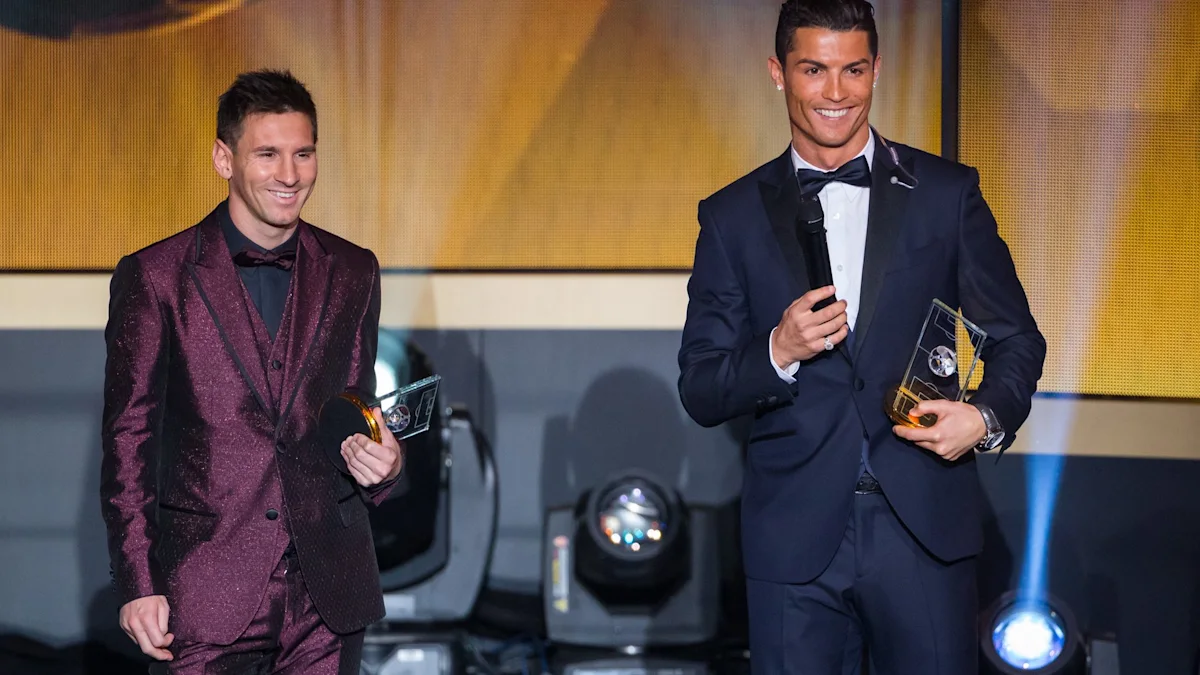
For more than a decade, Lionel Messi and Cristiano Ronaldo have defined one of football’s most compelling rivalries. Their competition for major trophies, individual awards and records often divided supporters, but a moment following Argentina’s 3-0 victory over Benin in Buenos Aires has highlighted a different side of their relationship: mutual respect between two extraordinary athletes.
Messi’s final appearance for Argentina brought his celebrated international career to a close. The 39-year-old forward marked the occasion with a goal and two assists, helping his team secure a convincing victory in front of an emotional home crowd. After the match, Ronaldo responded to Messi’s farewell message on social media with a tribute acknowledging the Argentine captain’s years of service to his country and the legacy he leaves behind.
Ronaldo’s message carried particular significance because the two players have spent much of their careers being compared with each other. Their rivalry became a defining feature of modern football during their years at Real Madrid and Barcelona, when their performances fuelled debates about individual greatness, playing styles and the standards required to dominate at the highest level. Yet their careers were never simply a contest between two individuals; both helped shape the expectations of an entire generation of football fans.
Messi’s international journey included difficult periods as well as historic triumphs. Early disappointments in major tournaments brought intense scrutiny, and his decision to step away from Argentina after the 2016 Copa América final briefly raised questions about whether he would return. He eventually came back, leading Argentina to the 2021 Copa América title, the 2022 Finalissima victory and the 2022 FIFA World Cup. Argentina’s Copa América triumph in 2024 further strengthened his place in the country’s football history.
The farewell against Benin offered a fitting sporting moment for a player whose international career stretched across more than two decades. Messi scored from the penalty spot and contributed to his team’s other goals, giving supporters one more opportunity to celebrate his influence in Argentina’s colours. His records for international appearances and goals underline the scale of his contribution, while the trophies he helped deliver gave that statistical achievement a lasting team dimension.
Ronaldo’s response also invites a broader look at how sporting rivalries evolve. Competition can create intense public narratives, especially when athletes are repeatedly placed in direct comparison. However, recognition from a peer who understands the physical demands, pressure and sacrifices involved can carry a different weight from praise offered by commentators or fans. Ronaldo’s tribute acknowledged not just Messi’s achievements, but also the years he devoted to representing Argentina.
Messi’s international retirement does not mean his football career is over. He is expected to continue playing at club level with Inter Miami, while Argentina must gradually prepare for life without a player who has been central to its identity for years. The transition will involve more than replacing goals; it will require new leaders to assume responsibility in crucial moments.
For Ronaldo, meanwhile, the tribute offers a reminder that the story of their rivalry extends beyond statistics and trophies. Their careers have been measured against one another for years, but Messi’s farewell has created a moment to recognise what both have contributed to the sport. One chapter of international football has closed, leaving behind a legacy that neither rivalry nor comparison can fully define.