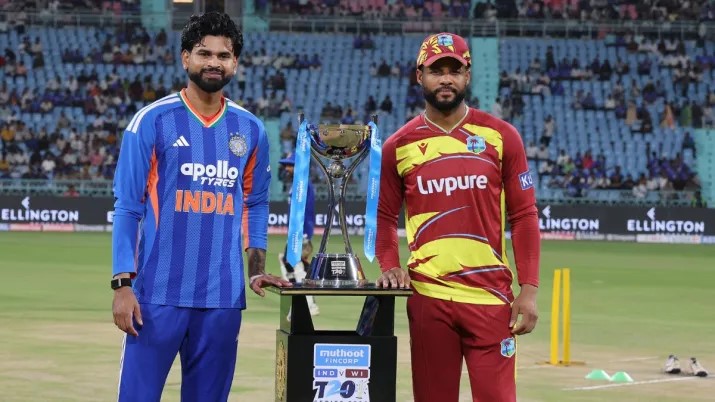

India’s defeat to West Indies in Hyderabad has put the spotlight on the team’s ability to handle high-pressure run chases. Former India captain Sunil Gavaskar has called for greater responsibility from the batting unit after the hosts failed to chase down a target of 248 in the fourth T20 International on October 14.
West Indies scored 247 for three in their 20 overs, while India were bowled out for 223 in 19.3 overs, losing by 24 runs. The result levelled the five-match series at 2-2 and set up a decisive encounter in Bengaluru on October 17. The defeat exposed concerns about India’s batting consistency, even as the team continued to pursue an aggressive approach in the shortest format.
Gavaskar’s assessment centred on the need to manage a chase according to the match situation rather than relying solely on attacking strokes. Speaking after the match, he said India needed to improve the way it pursued big totals and stressed that individual batters must take responsibility for converting promising starts into match-winning contributions. He also felt the team had failed to display the batting dominance expected from a side that had won consecutive T20 World Cups.
India appeared to have made a strong start when Sanju Samson struck 56 from just 23 deliveries. His innings gave the hosts early momentum, but the challenge was to maintain that scoring rate without losing wickets at regular intervals. In T20 cricket, a rapid start can put the opposition under pressure, yet a collapse in the middle overs can quickly reverse the advantage.
The contributions of the other batters became a major talking point. Abhishek Sharma scored 29, while India struggled to establish the kind of sustained partnership needed to control the chase. Keemo Paul proved decisive with five wickets, disrupting the innings at critical moments and preventing India from building a late surge that could have changed the outcome.
The defeat also highlighted the difference between an attacking philosophy and effective execution. Aggression remains an important part of modern T20 cricket, but batters must recognise when to attack, when to rotate the strike and when to preserve wickets for the final overs. Against a target approaching 250, losing several wickets in quick succession makes the required rate increasingly difficult to manage.
India’s bowling performance also deserves scrutiny. West Indies captain Shai Hope produced an unbeaten 102 from 50 balls, while Sherfane Rutherford contributed 49 not out from 26 deliveries. Their partnership helped the visitors build a formidable total, leaving India with a demanding chase. Gavaskar separately criticised India’s bowling execution, arguing that poor line and length should not be blamed on the pitch.
That wider assessment matters because the result cannot be explained by batting alone. India’s bowlers conceded too many runs, while the batters were unable to complete the chase. Improving both departments will be essential if the team wants to respond effectively in the final match.
The Bengaluru decider now offers India an immediate chance to correct its mistakes. The batting order will need to combine attacking intent with stronger partnerships and better decisions under pressure. Gavaskar’s message is ultimately about accountability: talent and aggressive cricket can create opportunities, but consistent execution is what turns them into victories.