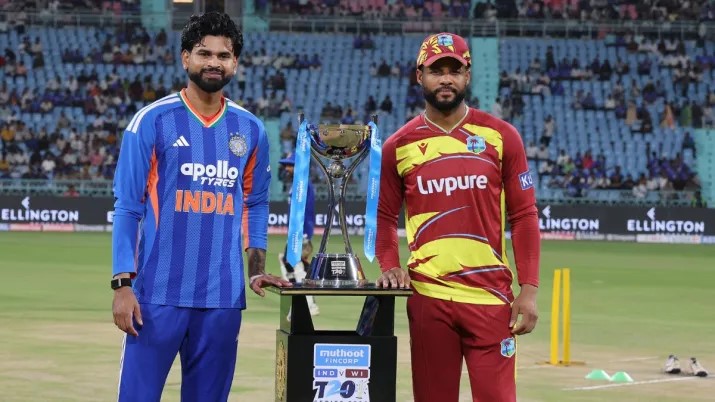
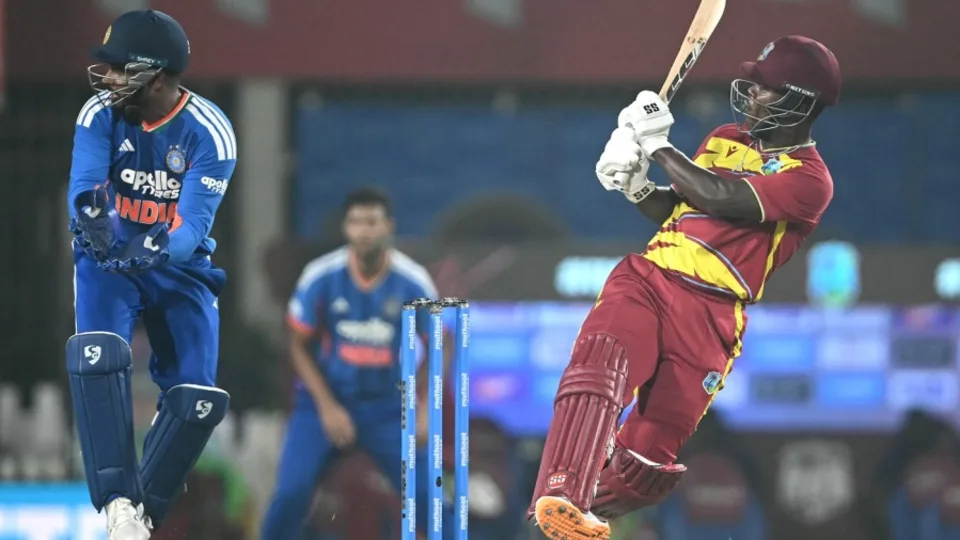
The contest between India and the West Indies took another dramatic turn in Indore on October 11, as a high-scoring third T20 International tested both teams’ batting firepower and their ability to handle pressure. India eventually secured a 14-run victory, moving ahead 2–1 in the five-match series and putting themselves in a stronger position with two matches remaining.
Batting first at the Holkar Stadium, India posted 223 before being bowled out in 20 overs. Abhishek Sharma provided the foundation for the total with an explosive 69 off just 30 deliveries, striking six fours and five sixes. His aggressive approach placed the West Indies bowlers under immediate pressure and allowed India to build momentum during the powerplay.
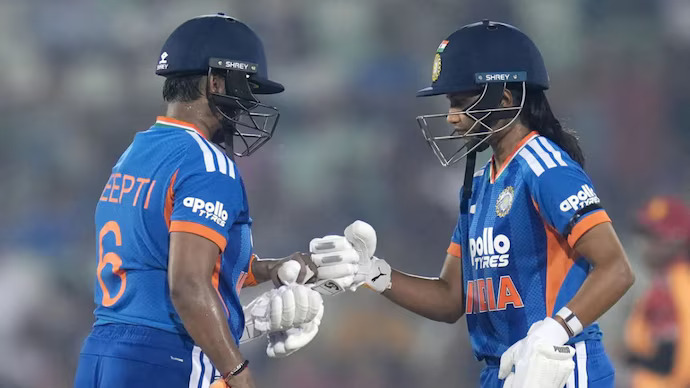
Ishan Kishan complemented Abhishek’s attacking innings with 37 off 18 balls. Their 108-run partnership from only 40 deliveries gave India a commanding platform and demonstrated how quickly a T20 innings can shift when two batters find their rhythm simultaneously. Kishan’s ability to attack the bowling alongside Abhishek prevented the visitors from settling into a consistent defensive plan.
However, India could not maintain the same scoring momentum throughout the innings. After reaching 115 for one, the batting order lost wickets at regular intervals. Tilak Varma contributed 28 from 16 balls, while Nitish Kumar Reddy scored 21 and Axar Patel added 20. Prince Yadav’s unbeaten 13 from six deliveries provided a useful late contribution, helping India finish with a formidable total despite the middle-order disruption.
The West Indies entered the chase needing 224 runs, a challenging target but not an impossible one on a surface that had already supported aggressive batting. Their response ended at 209 for seven in 20 overs. The visitors showed enough attacking intent to keep the contest alive, but India’s bowlers managed to take wickets at crucial moments rather than allowing the chase to develop uninterrupted.
Arshdeep Singh was central to that effort, claiming three wickets and earning the Player of the Match award. His dismissal of captain Shai Hope for five runs removed an important batter early in the chase. The West Indies then attempted to rebuild through their middle order, but India found further breakthroughs when the visitors began to threaten a stronger finish.
Naman Dhir also played a significant role, dismissing Kamil Pooran and Shimron Hetmyer as the West Indies looked to accelerate. Those wickets mattered because the visitors needed partnerships capable of sustaining a high scoring rate without losing too many batters. India’s bowling response was more disciplined than in the second T20I, when the West Indies successfully chased down a target of 250.
The result highlights a key lesson in modern T20 cricket: a big total creates pressure, but it does not guarantee victory. India’s explosive start gave them the advantage, while timely wickets prevented the West Indies from converting their chase into a winning finish. At the same time, India’s late batting collapse showed that the team still has room to improve its ability to manage the final overs.
With India leading the series 2–1, the fourth T20I becomes an important opportunity to build on this recovery. Another victory would secure the series for India, while the West Indies must respond quickly to keep the contest alive. The Indore match has set up a compelling next stage, with both sides having clear areas to strengthen before their next meeting.